
GARDEN BLOG FEBRUARY 2026
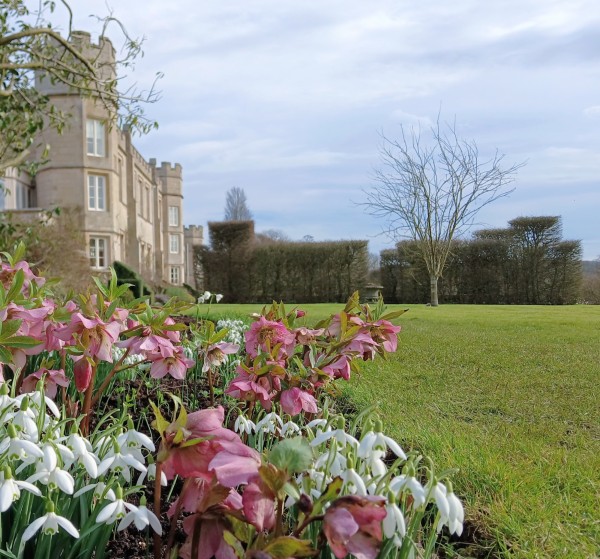
Snowdrops and hellebores
If a gardening friend should ever suggest you go outside to admire their ‘dingle-dangles’, be sure to wrap-up well as you might be outdoors for quite some time. They’re a galanthophile, and want you to take a jolly good gander at their favourite bulbs.
The name ‘dingle-dangles’ is one of many used across Britain in reference to snowdrops. Others include such likes as ‘February fairmaids’, ‘Mary's tapers’, and ‘little sisters of the snows’. The name ‘snowdrop’ first appears in a hefty work by John Gerard titled ‘The Herball, or Generall Historie of Plantes’ published in 1636, though it’s believed to have been in common parlance for some time before that.
On a more scientific note, the botanical name for snowdrops is Galanthus, and was given by eminent Swedish botanist, Carl Linnaeus, in 1735, who described it in his ‘Species Plantarum’, published in 1753. The name Galanthus has its origins in the Greek words ‘gala’ meaning milk, and ‘anthos’ meaning flower. By far the most common snowdrop seen growing wild in Britain is Galanthus nivalis, with ‘nivalis’ meaning ‘of the snow’, referring to the plant’s early flowering.
February, here at Deene Park, is all about snowdrops. We have many acres of naturalised snowdrops carpeting the ground in both our formal gardens and wild gardens, together with a large collection of named varieties in beds against the house, their delicate pure white blooms gently nodding in the slightest of breeze.
It would be easy to imagine, given their presence in such great numbers, that snowdrops are native to Britain, but they’re not. They originate from continental Europe, in a swath stretching from the Pyrenees, through the south of France and Germany, across central Europe to Ukraine, and down through Italy and Greece.
Speaking of Greece, well the ancient variety, in Homer's Odyssey, Hermes gave Odysseus a potion made from snowdrops to protect him from a poison administered by Circe, via the medium of cheese and wine, that had turned his men into swine after she had lured them into her home. On being confronted by Odysseus, Circe was so impressed by him resisting her sorcery and threatening her with his sword, that she changed his men back to their human form. You would imagine, after all those shenanigans, that Odysseus and his men might want to skedaddle sharpish, but no, they hang around for a full year before setting off again. Circe plainly had her charms.
At this point, it’s worth pointing out that you’re not Odysseus, and scoffing snowdrop bulbs is most certainly not to be recommended. The upshot of such reckless behaviour will be nausea, vomiting, and slowing of the heart.
Alongside snowdrops, a host of other early flowering beauties are making their mark on our gardens right now, and feeding emerging bees of all kinds to boot. Among others, we have cheery golden winter aconites that smother the ground, clumps of bashful hellebores with their bowed flower heads, richly scented winter daphnes, and brightly coloured flowering quinces.
Flowering quinces, known to botanically minded types as Chaenomoles, are a medium to large sized deciduous shrub that is native to East Asia. Besides their floral qualities, they produce small, aromatic, yellow fruit in autumn. Though thoroughly unpleasant to eat raw, with the taste of an unripe apple and acidity of a lemon, they do soften and become less astringent after being frosted, and are suitable for making liqueurs, marmalade, and preserves.
To see first-hand the full floral offering on show just now, be sure to pop along to one of our Snowdrop Sundays, 15th February or 22nd February, tickets available at deenepark.com/home/events
Until next month Happy gardening

Winter Aconites |
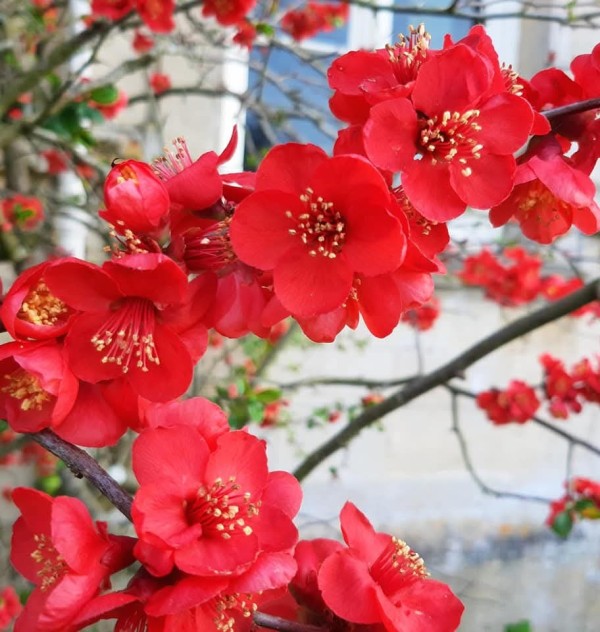
Flowering quince |
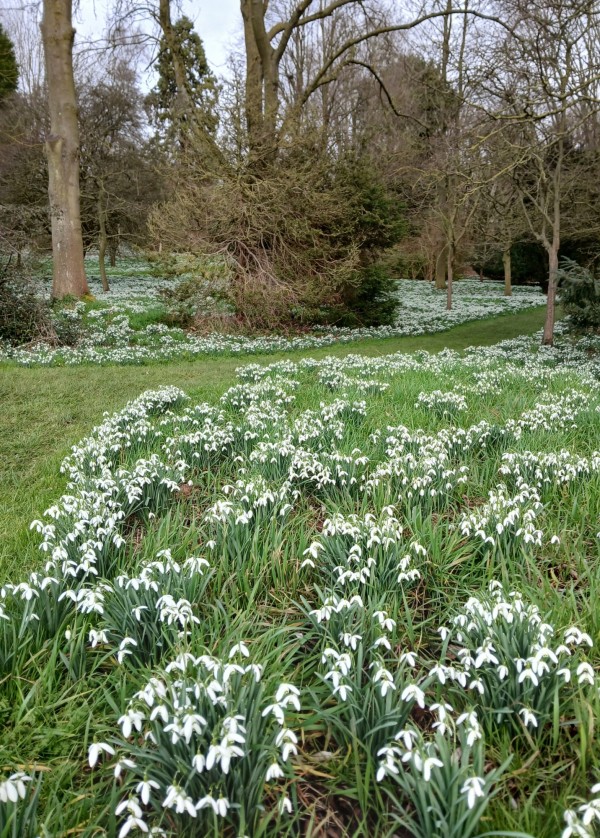
Carpets of snowdrops |

Odysseus threatens Circe (1630 - 1635) by Jacob Jordaens - Kunstmuseum, Basel |